

 See My Latest Article on HelloNation

Sports injuries can affect anyone, from recreational runners and cyclists to people who play weekend basketball, lift weights, swim, or participate in youth athletics. Chiropractic care may help some people manage pain, restore movement, and return gradually to activity, particularly when an injury involves the spine, joints, muscles, or movement patterns.
It is not a replacement for emergency care, fracture treatment, surgery, or a complete rehabilitation plan. The most appropriate approach depends on the type and severity of the injury.
What types of sports injuries may benefit from chiropractic care?
Chiropractic care is generally most relevant to musculoskeletal problems involving movement, joint function, and soft tissues. Examples include:
- Low back pain after lifting, twisting, running, or contact
- Neck or upper-back discomfort after a fall or collision
- Restricted movement in the shoulders, hips, or spine
- Mild muscle strains involving the hamstrings, calves, or back
- Joint stiffness after a period of reduced activity
- Repetitive-use discomfort related to training errors or poor movement mechanics
- Some uncomplicated sprains after serious injury has been ruled out
A sprain affects a ligament, while a strain affects a muscle or tendon. Both can occur during sudden stops, changes in direction, jumping, lifting, or direct impact. Chiropractic assessment may be useful for identifying how nearby joints and muscles are contributing to symptoms, but significant swelling, instability, bruising, weakness, or inability to bear weight requires careful medical evaluation.
How can a chiropractor help after a sports injury?
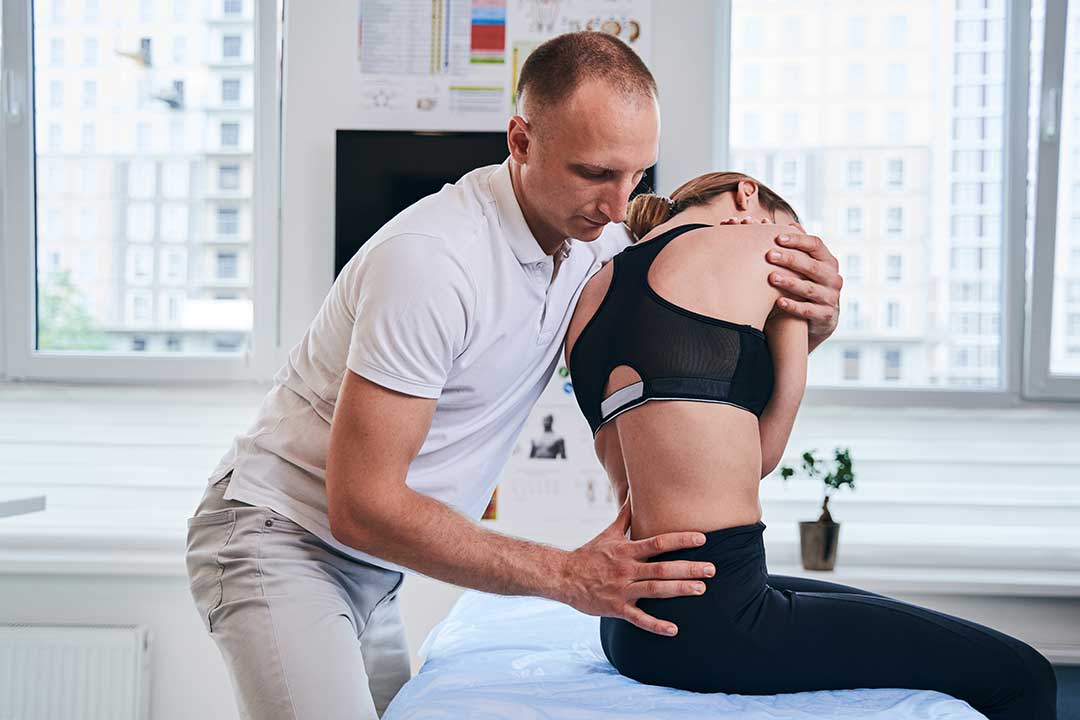
The first step should be an examination rather than immediate treatment. A careful evaluation may include questions about how the injury occurred, pain location, range of motion, strength, balance, and symptoms such as numbness or tingling.
Depending on the findings, care may include:
- Joint mobilization or manipulation when appropriate
- Gentle soft-tissue techniques
- Exercise instruction for mobility, strength, balance, or coordination
- Guidance on modifying activity while tissues heal
- Education about posture, lifting, warmups, and training progression
- Referral for imaging or medical assessment when the injury appears outside chiropractic scope
The purpose is not simply to make a joint “move better.” A useful plan should connect treatment with a functional goal, such as walking comfortably, rotating the torso, climbing stairs, reaching overhead, or completing a controlled sports movement.
Spinal manipulation is one technique used in chiropractic care, but it is not appropriate for every injury or every person. Some patients may benefit more from exercise, education, gradual loading, or gentle hands-on care.
Does chiropractic care speed up sports injury recovery?
It may help reduce pain and improve movement for selected musculoskeletal conditions, but recovery time depends on the tissue involved, injury severity, sleep, nutrition, training demands, and whether the area is repeatedly irritated.
A minor back strain and a torn ligament do not follow the same recovery timeline. A treatment that reduces discomfort does not necessarily mean the injured tissue is fully healed. Pain can improve before strength, balance, and coordination return.
For that reason, recovery should be measured by function as well as symptoms. Useful progress markers may include:
- Nearly normal range of motion
- Improved strength on the injured side
- Ability to perform daily activities without compensation
- Better balance and control
- Tolerance of gradual sport-specific drills
- No increase in pain or swelling after activity
Returning too quickly because pain has temporarily eased can increase the risk of reinjury.
What should someone do during the first day or two?
For a new injury, protect the area from movements that clearly worsen symptoms. Rest does not always mean complete inactivity; gentle movement that does not increase pain may help prevent excessive stiffness.
Initial self-care may include:
- Relative rest from running, jumping, contact, or heavy lifting
- Elevating a swollen limb when practical
- Compression when appropriate and comfortable
- Cold therapy for short periods if it helps with pain
- Avoiding aggressive stretching or deep massage over a fresh injury
Medication decisions should account for allergies, stomach or kidney conditions, blood-thinning medication, pregnancy, and other health factors. A pharmacist or medical clinician can help determine whether an over-the-counter option is appropriate.
In Queen Creek, AZ, outdoor activities may occur in substantial heat for much of the year. Dehydration and exercising during the hottest part of the day can worsen fatigue, coordination, and cramping. Hydration, shaded recovery periods, suitable footwear, and gradual acclimatization are practical parts of injury prevention.
Can chiropractic care help prevent future sports injuries?
Prevention is less about keeping the spine in a permanently “perfect” position and more about improving capacity and managing training demands. Chiropractic care may support prevention when it is combined with strengthening, mobility work, sound technique, and adequate recovery.
Common contributors to recurring injuries include:
- Increasing mileage, weight, or intensity too quickly
- Repeating the same movement without rest
- Weakness on one side of the body
- Poor landing, lifting, or cutting mechanics
- Limited ankle, hip, shoulder, or thoracic movement
- Returning to sport before strength and coordination are restored
- Inadequate sleep or recovery between sessions
A balanced program should gradually expose the body to the movements required by the activity. Someone preparing for recreational games, trail exercise, cycling, or weight training may need different conditioning than someone returning to distance running.
When is chiropractic care not the right first step?
Some symptoms require urgent medical evaluation rather than routine musculoskeletal care. Seek prompt medical attention for:
- Suspected fracture or visible deformity
- Inability to bear weight after an injury
- Severe or rapidly increasing swelling
- Loss of strength, sensation, or coordination
- Numbness involving both legs or loss of bladder or bowel control
- Chest pain, shortness of breath, fainting, or severe dizziness
- Head injury followed by confusion, repeated vomiting, worsening headache, or unusual sleepiness
- Neck pain after significant trauma
- Fever, unexplained weight loss, or pain that is severe at rest
Neck manipulation deserves particular caution after a collision, fall, or sudden neck injury. A thorough examination should come before any high-velocity technique. People with certain vascular, bone, neurological, or connective-tissue conditions may need alternative care or medical clearance.
How should an athlete return to activity?
A safe return is usually progressive rather than based on a specific number of days. Begin with ordinary daily movements, then light exercise, followed by controlled sport-specific activity. Intensity, speed, resistance, and contact should be increased one variable at a time.
A person returning after an ankle sprain, for example, may progress from walking to balance work, then jogging, directional changes, and finally jumping or competition drills. Pain, swelling, limping, or reduced control during or after exercise means the progression may be moving too quickly.
For children and teenagers, return-to-play decisions deserve added care because growth, skill development, and communication about symptoms can affect risk. Coaches, parents, athletic trainers, medical clinicians, and the athlete should share information rather than relying only on pain relief.
Chiropractic care can be one part of sports injury management when the problem is appropriate for conservative musculoskeletal treatment. The strongest plans combine a clear diagnosis, realistic activity modification, targeted exercise, monitoring of progress, and referral when symptoms suggest a more serious injury.